Setting Gears Icon Review
As an embroidery designer who spends hours evaluating digitized files for commercial viability, I approach every new asset with a critical eye. We aren’t just looking for something that looks good on a screen; we are looking for something that translates flawlessly to fabric, holds up to wear and tear, and elevates the brand of the small business owner using it. Today, I am reviewing the Setting Gears Icon, a design described as bringing "a bit of charm" with a "playful" and "whimsical touch." While the description suggests a decorative purpose, my review focuses strictly on its utility for branded merchandise, patches, uniforms, and small business product lines.
First Impressions: Personality and Visual Impact
The title "Setting Gears Icon" immediately suggests motion, mechanics, and precision. However, the accompanying description emphasizes charm and whimsy. This creates an interesting tension in the visual identity. In my experience, designs that combine mechanical elements with playful aesthetics often appeal to creative studios, boutique bakeries, craft businesses, and handmade brands that want to project a sense of industrious creativity without being overly corporate or rigid.
Visually, this icon likely strikes a balance between modern and classic. It feels professional enough for staff uniforms but friendly enough for customer-facing merchandise like tote bags and aprons. For a small café or a local florist, this design could serve as a subtle nod to the "work" involved in their craft, wrapped in a package that feels inviting rather than industrial. The whimsical nature ensures it doesn’t feel cold, which is crucial for building customer trust and engagement in the handmade sector.
Real-World Business Applications
When evaluating a machine embroidery design for commercial use, I look at where it can live on a garment or accessory. The Setting Gears Icon shows promise across several key categories for small business owners and Etsy sellers.
- Embroidered Patches: This is perhaps the strongest use case. A well-executed gear icon works beautifully as a standalone patch. These can be sewn onto denim jackets, backpacks, or the backs of caps to add a personalized touch. For a creative studio or agency, these patches can serve as team identifiers or client gifts.
- Staff Uniforms and Aprons: For cafes, bakeries, or workshops, branding needs to be visible but not overwhelming. Placing the Setting Gears Icon on the chest pocket of an apron or the sleeve of a work shirt provides consistent brand identity. It signals attention to detail and craftsmanship, qualities that customers value highly.
- Caps and Hats: Cap embroidery requires designs that are legible from a distance. If the Setting Gears Icon has clean lines and sufficient negative space, it will perform well on the front panel of a baseball cap or a structured trucker hat. This is a staple item for event merch and promotional giveaways.
- Tote Bags and Product Packaging: Canvas totes are a favorite among handmade brands. Stitching this icon near the handle or centered on the bag adds a premium feel. Furthermore, it can be used on product packaging accents, such as labels on jars of jam, boxes of candles, or tags attached to jewelry, reinforcing the handmade product narrative.
- Digital Assets and Mockups: Even if you do not embroider every item yourself, having a high-quality digital embroidery file allows you to create printable mockups for client approval. This is essential for custom apparel businesses that need to visualize how a design will look before committing to production.
Strategic Branding Benefits
Using a cohesive design language like the Setting Gears Icon across multiple touchpoints significantly impacts brand identity. When a customer sees the same icon on a t-shirt, a towel, and a business card, it creates visual consistency. This repetition builds recognition and professionalism. In a crowded marketplace, such as Etsy or local craft fairs, standing out while maintaining a polished look is key to increasing product value and buyer engagement.
Moreover, a design that feels "crafted" rather than mass-produced resonates with consumers who prioritize supporting small businesses. The whimsical yet functional nature of this icon suggests a brand that cares about both aesthetics and utility, fostering deeper customer loyalty.
Where to Exercise Caution
No design is perfect for every application. As a designer, I must highlight specific scenarios where the Setting Gears Icon might struggle, requiring careful consideration before production.
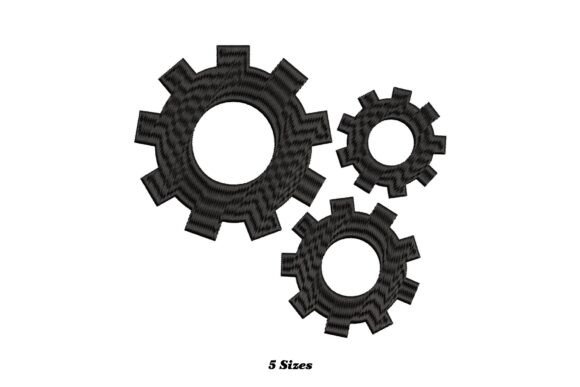
- Small Patch Sizes: If you intend to scale this design down to a very small size (e.g., under 2 inches), intricate details may become muddy. Gear teeth and fine outlines can merge together, losing the intended shape. Always test the smallest intended size before ordering bulk materials.
- Curved Surfaces: Embroidering on the curved front of a cap or the rounded shoulder of a sweatshirt can distort the geometry of gears. Ensure your hoop setup accommodates the curvature, or consider placing the design on a flatter area, such as the side or back of a hat.
- High Stitch Density: Designs with dense stitching can feel stiff and heavy on lightweight fabrics. If you plan to use this on delicate shirts or thin towels, check the stitch density. Too much density can cause puckering, especially on natural fibers like cotton or linen.
- Textured Fabrics: While the design may look great on smooth canvas, textured fabrics like bouclé or thick fleece can hide the finer details of the embroidery. The contrast between the thread and the fabric texture is crucial for legibility.
- Frequent Washing: For items that will undergo frequent industrial washing, such as restaurant aprons, ensure the design uses appropriate underlay stitches to prevent distortion over time. Dark uniforms may also require specific thread choices to maintain contrast and visibility.
Practical Designer Notes for Production
Before incorporating the Setting Gears Icon into your commercial workflow, follow these practical steps to ensure a successful outcome.
- Test in Black and White: Convert the design to monochrome to check the spacing and balance. This helps identify if any areas are too crowded or if the silhouette remains strong without color distractions.
- Review Thread Color Contrast: Select thread colors that offer high contrast against your target fabric. Light threads on dark fabric or vice versa generally yield the best results. Avoid similar tones unless you are aiming for a subtle, tonal effect.
- Confirm Hoop Size: Verify that the hoop size required by the design fits within your available equipment and the dimensions of your product. A design that requires a large hoop may not fit on smaller items like baby clothes or narrow sleeves.
- Use Proper Stabilizer: The choice of stabilizer is as important as the design itself. Use cut-away stabilizers for stretchy fabrics to prevent distortion, and tear-away stabilizers for woven fabrics. This step is critical for maintaining the integrity of the embroidery file.
- Inspect Spacing and Outlines: Zoom in on the digitized file to inspect the spacing between gear teeth and the thickness of outlines. Adjustments may be needed to improve stitch efficiency and reduce thread breaks.
- Create a Mockup: Produce a physical sample on the actual fabric you plan to sell. Digital previews can be deceiving. Seeing the finished product in hand allows you to assess the tactile quality and visual impact accurately.
- Compare Against Other Assets: Place the Setting Gears Icon alongside other design assets in your library to ensure it complements your existing brand palette and style guide.
- Confirm Commercial Licensing: Finally, always verify the licensing terms of the digital embroidery file. Ensure you have the right to use the design for commercial purposes, including selling finished goods, before launching your product line.
In conclusion, the Setting Gears Icon offers a versatile and charming option for small business owners looking to enhance their merchandise. By understanding its strengths and limitations, and by following rigorous testing protocols, you can leverage this design to create high-quality, professional embroidered products that resonate with your audience.