Floral Oma: A Designer's Review for Small Business Merch
As a professional embroidery designer who has spent years refining designs for commercial use, I approach every new file with a critical eye. When evaluating Floral Oma, my focus shifts immediately from simple aesthetics to its viability as a core asset for small business merchandise and branded patches. This review is not just about how the design looks on a pillow; it is about how it functions as a tool for brand identity, customer trust, and product value in a competitive market.
First Impressions: Whimsy Meets Professionalism
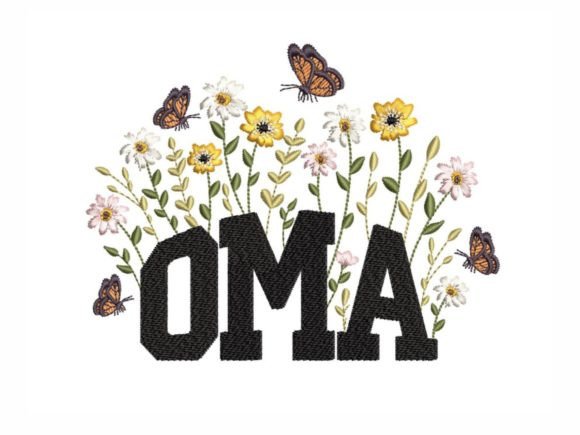
The description of Floral Oma promises a "touch of whimsy and charm," which immediately sets a specific tone for potential applications. In the world of custom apparel and handmade products, this phrase suggests a design that is friendly, approachable, and likely to appeal to a demographic that values artisanal quality over corporate sterility. For a boutique owner or an Etsy seller, this visual personality is crucial.
From a design perspective, the name itself evokes warmth and heritage. It feels less like a generic floral pattern and more like a signature element. However, when reviewing a machine embroidery design for commercial purposes, we must look beyond the title. Does the implied whimsy translate into a clean stitch structure? Can it hold up against the rigors of daily wear and frequent washing? The initial assessment suggests that Floral Oma is well-suited for brands that want to project a sense of care and attention to detail, whether that be a local florist, a craft studio, or a specialty bakery.
Real-World Applications for Small Business Assets
The versatility of Floral Oma makes it a strong candidate for various high-value touchpoints in a small business ecosystem. Unlike a large, sprawling graphic that dominates a garment, a design described as charming often works best as an accent or a focal point that adds personality without overwhelming the user.
- Embroidered Patches: One of the most effective uses for a design like this is creating embroidered patches. These can be applied to denim jackets, canvas tote bags, or even used as a logo variation on product packaging. The whimsical nature of Floral Oma allows it to stand out as a collectible item, increasing the perceived value of the finished product.
- Staff Uniforms and Aprons: For a café or a creative studio, branding staff uniforms is essential for recognition. Floral Oma could serve as a chest logo accent or a sleeve detail. On apron embroidery, specifically in a bakery or florist setting, this design reinforces the theme of the business while maintaining a professional appearance.
- Tote Bag Design: Tote bags are a staple of small business merch. They are mobile billboards for your brand. Placing Floral Oma on a tote bag offers a balance of decoration and utility. It transforms a basic canvas bag into a branded asset that customers are proud to carry, extending your reach into their daily lives.
- Caps and Headwear: Cap embroidery requires precision. If the design elements of Floral Oma are tight enough, they can work beautifully on the front panel of a cap or the side of a bucket hat. This is particularly effective for event merch or promotional giveaways where you need a compact but memorable mark.
- Product Packaging Accents: Beyond apparel, consider using this design on product labels, hang tags, or even as a stamp on tissue paper. As a digital embroidery file, it can be integrated into your visual identity system, ensuring consistency across all touchpoints.
Strategic Considerations and Limitations
While Floral Oma holds significant promise, a seasoned designer knows that context is everything. There are specific scenarios where this design might require caution or adaptation to ensure the finished product meets professional standards.
Size and Detail Constraints: When scaling down a design for a small patch size or a cap front, intricate details can sometimes get lost or cause thread breaks. If Floral Oma contains fine outlines or dense stitching, it may struggle on very small dimensions. It is vital to test the design at the intended final size before committing to a production run. Tiny lettering or delicate flower centers might blur if the stitch density is too high for the fabric type.
Fabric Texture and Color: The success of any embroidery file depends heavily on the substrate. On textured fabrics like heavy denim or boucle wool, the design might not lay flat, distorting the intended shape. Furthermore, on dark uniforms, the thread colors used in Floral Oma must have sufficient contrast. If the design relies on light pastels to convey its "whimsy," it will disappear on a black shirt unless a high-quality underlay or contrasting background is used.
Curved Surfaces: Embroidering on curved surfaces like caps requires specialized hoops and techniques. A design that looks perfect on a flat hoop might pucker or distort when pulled around the curve of a cap. Evaluating the stability of the stitch patterns in Floral Oma is essential for these three-dimensional applications.
Impact on Brand Identity and Customer Trust
In the handmade product sector, visual consistency is a primary driver of buyer engagement. A sloppy or poorly executed embroidery job can undermine the premium feel of a brand. Conversely, a well-executed design like Floral Oma signals professionalism.
When a customer sees a crisp, well-placed embroidered patch on a tote bag or a neatly stitched logo on an apron, it validates their purchase decision. It suggests that the business cares about quality. This design, with its promise of charm, can humanize a brand, making it feel more accessible and trustworthy. It bridges the gap between a faceless corporation and a local business with a personal touch. For Mother S Day collections or seasonal promotions, this emotional connection is invaluable for driving sales.
Practical Designer Notes for Production
Before integrating Floral Oma into your commercial workflow, there are several technical steps every designer and business owner should take to ensure success.
- Test in Black and White: Convert the design to grayscale first to check the contrast and spacing. This helps identify areas where stitches might be too close together or where the design might look muddy.
- Check Stitch Density: High stitch density can make a fabric stiff and prone to puckering. Ensure the design is optimized for the fabric weight you intend to use, especially for items that need to remain soft, like towels or lightweight tees.
- Verify Thread Colors: Compare the recommended thread colors against your actual inventory. Lighting conditions can alter color perception, so physical swatching is always better than relying on screen previews.
- Inspect Spacing and Hoop Size: Confirm that the design fits within your standard hoop sizes. If the design exceeds your hoop capacity, you may need to re-digitize it or adjust the placement strategy.
- Use Proper Stabilizer: The choice of stabilizer is critical. For stretchy knaps or heavy denim, the wrong stabilizer can ruin the design's integrity. Always match the stabilizer to the fabric texture.
- Create a Printable Mockup: Before running a full production batch, create a printable mockup or a single sample. Use this for client approval or internal quality control to catch any issues early.
- Confirm Commercial Licensing: This is perhaps the most important step. Ensure you have the correct rights to use Floral Oma for resale, including on embroidered patches and custom apparel. Check the license terms regarding the number of units you can produce.
By following these guidelines, you can transform the raw potential of the Floral Oma machine embroidery design into a polished, high-value asset for your small business. Whether you are creating a line of branded gifts, updating staff uniforms, or launching a new collection of handmade goods, this design offers a versatile foundation for building a recognizable and trusted brand presence.