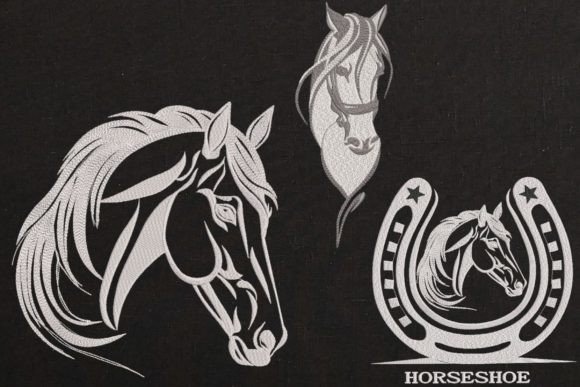
Set Horse Head and Horseshoe Farm Animal Review
As an experienced embroidery designer who has spent years refining digital assets for commercial use, I approach every new file with a critical eye. When evaluating the Set Horse Head and Horseshoe Farm Animal design, my primary focus is not just on how it looks on a screen, but how it translates into a tangible product that drives brand value. This review explores the viability of this machine embroidery design for small business merchandise, branded patches, and custom apparel.
First Impressions: A Blend of Rustic Charm and Professionalism
The title Set Horse Head and Horseshoe Farm Animal immediately evokes a sense of classic Americana and rustic elegance. For a boutique bakery, a pet brand, or a local farm-to-table café, this visual language is powerful. The combination of a horse head and a horseshoe suggests reliability, tradition, and a touch of whimsy. It feels less like a generic clipart image and more like a curated design asset intended for high-quality finished products.
In terms of personality, this design strikes a balance between playful and professional. It is bold enough to serve as a focal point on a tote bag design but detailed enough to look premium when used as a chest logo accent on staff uniforms. The description notes its suitability for trendy pillows, wall art, and tea towels, which indicates a versatility that extends beyond simple clothing decoration. For the handmade product creator, this offers a sophisticated way to elevate a basic item into a memorable souvenir.
Real-World Application for Small Business Merch
Imagine a scenario where a local florist wants to launch a line of branded apron embroidery for their staff and sell matching tote bags to customers. The Set Horse Head and Horseshoe Farm Animal design fits this narrative perfectly. The horseshoe element naturally aligns with themes of good luck and growth, making it an ideal symbol for a growing business.
- Embroidered Patches: This design is a strong candidate for creating iron-on or sew-on embroidered patches. Whether applied to denim jackets, canvas backpacks, or the backs of caps, the dual imagery allows for a larger, more impactful patch that stands out in a crowd.
- Staff Uniforms: For a team environment, placing this design on the left chest of a work shirt adds a personalized touch without being overly distracting. It reinforces a cohesive brand identity among employees.
- Cap Embroidery: The curved nature of a cap front often challenges complex designs. However, if the stitch density is managed well, the circular potential of the horseshoe can frame the horse head beautifully, creating a balanced cap design.
- Product Packaging: Small business owners often overlook packaging. Using this embroidery file for a branded label on a gift box or a hang tag on a garment can significantly increase perceived value and customer trust.
Strategic Use Cases for Specific Industries
The versatility of this digital embroidery file makes it adaptable across various sectors. A craft business selling handmade soaps could use the design on a branded soap dish or packaging accent. A creative studio might utilize it for event merch, such as t-shirts or napkins for a workshop. Even a pet brand focused on equestrian themes would find this design resonant with their target audience.
When used correctly, these design assets do more than just decorate; they tell a story. They signal to the buyer that the business cares about aesthetics and quality. This attention to detail fosters brand recognition and encourages repeat purchases. For Etsy sellers, having a unique, professionally executed design like Set Horse Head and Horseshoe Farm Animal can be the differentiator that sets a shop apart from competitors using low-resolution graphics.
Critical Considerations and Potential Pitfalls
While the potential is high, a professional designer must also identify where this machine embroidery design requires careful handling. Not every application is suitable for every fabric texture or size constraint.
Small Patch Sizes: If you attempt to scale this design down too much for a tiny wrist patch or a small buttonhole, you risk losing definition. Complex outlines and detailed stitching may merge together, resulting in a muddy appearance. Always test the design at your intended final size before committing to a production run.
Curved Surfaces and Cap Embroidery: Embroidering on the front of a cap involves significant curvature. Designs with long vertical lines or wide spacing can distort easily. Ensure that the hoop size and stabilizer choice are appropriate for the curve of the hat to prevent puckering or misalignment.
Stitch Density and Fabric Texture: High stitch density is necessary for durability, especially on items that will undergo frequent washing, like aprons or work shirts. However, too much density on a soft fabric like a tee shirt can cause the material to pucker or become stiff. Additionally, textured fabrics like heavy canvas or bouclé may hide the fine details of the horse head, requiring a simpler version of the design.
Dark Uniforms: The visibility of thread colors on dark backgrounds is crucial. If the design relies on light outlines or subtle shading, it may get lost against a black or navy uniform. You must carefully review thread color contrast to ensure the design pops and remains legible.
Maximizing Brand Identity Through Quality
The quality of your embroidery directly impacts your brand identity. A poorly stitched logo can undermine customer trust and make a product feel cheap. Conversely, a crisp, well-executed Set Horse Head and Horseshoe Farm Animal design signals professionalism and attention to detail. It enhances the visual consistency of your product line, making your brand feel established and reliable.
For businesses looking to create custom apparel or promotional gifts, ensuring that the design retains its integrity is vital. This affects the finished product's overall appeal and the buyer's engagement with the brand. A consistent, high-quality visual presence helps build a loyal customer base that associates your brand with excellence.
Essential Designer Notes for Production
Before incorporating this design into your commercial projects, follow these practical steps to ensure success:
- Test in Black and White: Convert the design to grayscale first to check the contrast and flow of the stitches. This helps identify any areas that might look cluttered or weak.
- Verify File Specifications: The product description mentions the design comes with "multi" (likely multi-color), but exact stitch counts, file formats, and recommended hoop sizes are not explicitly detailed here. Always verify these technical specifications with the provider before starting production.
- Check Thread Color Contrast: Select thread colors that offer high contrast against your target fabric. Test a swatch to ensure the colors render accurately under different lighting conditions.
- Inspect Spacing and Hoop Size: Ensure the design fits within your standard hoop size without cutting off elements. Adjust the placement to avoid seams or difficult-to-stitch areas.
- Use Proper Stabilizer: The type of stabilizer (cut-away, tear-away, or water-soluble) depends heavily on the fabric texture. For stretchy knits, a cut-away stabilizer is usually required to maintain shape over time.
- Create a Printable Mockup: Before ordering materials, generate a printable mockup to show clients or stakeholders. This allows for approval on the design's placement and scale.
- Confirm Commercial Licensing: Most importantly, confirm that you have the right to use this design for commercial purposes. Check the license terms to ensure you can sell products featuring the Set Horse Head and Horseshoe Farm Animal design without legal issues.
By treating the Set Horse Head and Horseshoe Farm Animal design with the same rigor as any other critical business asset, you ensure that your embroidered patches, apron embroidery, and tote bag designs meet the highest standards. With proper planning and testing, this design can become a cornerstone of your small business merch strategy, adding value and character to every item it adorns.