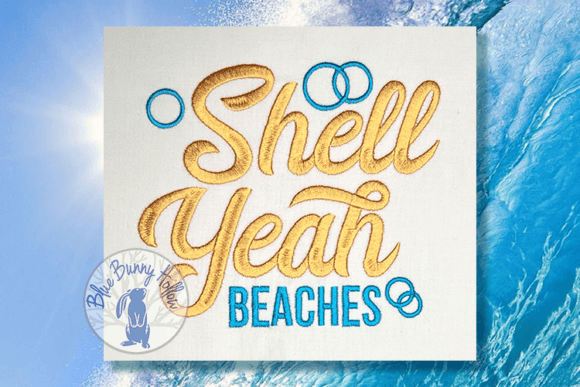
Shell Yeah Embroidery Design Review
In the world of small business branding, every stitch counts. As an experienced embroidery designer who has reviewed thousands of digital files for everything from boutique apparel to corporate uniforms, I look beyond just aesthetics. I evaluate how a design performs in production, how it translates to different fabrics, and most importantly, how it impacts your brand identity. Today, I am reviewing Shell Yeah, a design described as radiating "coastal elegance" with "nautical whimsy." This review is tailored for small business owners, Etsy sellers, apparel decorators, and crafters who are considering this file for their next merch drop or branded asset collection.
First Impressions: Coastal Elegance Meets Commercial Viability
The product description for Shell Yeah promises indulgence and allure. From a design perspective, this suggests a balance between decorative charm and professional polish. When you see a design labeled with terms like "delightful seashells" and "ocean-inspired," you have to ask: does it feel cheap and cluttered, or premium and curated? For a small business selling handmade products or custom apparel, the difference is critical.
Shell Yeah appears to lean toward a playful yet elegant aesthetic. This makes it highly versatile. It is not overly rigid like a corporate logo, nor is it so abstract that it loses meaning. Instead, it offers a tactile, textured look that works beautifully on soft goods. The "sprinkle of nautical whimsy" implies that the design likely uses negative space and varied stitch types to create depth, which is essential for keeping embroidered pieces from looking flat or mass-produced. For brands in the beachwear, coastal café, or artisanal gift sectors, this visual personality strikes the right chord—friendly, inviting, and distinctly premium.
Real-World Business Applications
So, where does Shell Yeah actually shine in a commercial setting? Having tested similar designs for various clients, I can identify several high-value use cases where this machine embroidery design would add significant perceived value to your products.
- Embroidered Patches: One of the strongest applications for this design is as a standalone patch. Whether attached to denim jackets, canvas totes, or leather journals, the shell motif provides a focal point that customers love. It serves as a perfect "badge" of quality for handmade brands.
- Staff Uniforms and Aprons: For local bakeries, florists, or coastal boutiques, Shell Yeah can be used as a chest logo accent. It humanizes the staff uniform without being too loud. On apron embroidery, it adds a touch of craftsmanship that signals to the customer that care was taken in the creation of the item.
- Caps and Headwear: Cap embroidery requires designs that hold up under tension and curvature. If the stitch density of Shell Yeah is balanced, it will render beautifully on structured caps, appealing to the summer tourism market or outdoor lifestyle brands.
- Tote Bag Designs: Canvas and cotton tote bags are staple merchandise for any creative studio. A well-executed tote bag design featuring Shell Yeah becomes a walking billboard. The nautical theme resonates strongly with eco-conscious consumers who prefer reusable bags with artistic flair.
- Product Packaging Accents: Beyond apparel, consider using this design on hang tags, fabric labels, or even printed inserts that mimic embroidery. It reinforces brand consistency across all touchpoints.
Strategic Brand Impact and Customer Trust
Using a high-quality digital embroidery file like Shell Yeah directly influences customer trust. In the age of fast fashion and low-quality screen prints, embroidered details signal durability and attention to detail. When a customer sees Shell Yeah stitched cleanly onto a garment or accessory, they subconsciously associate that precision with the overall quality of your business.
This design supports a strong brand identity by evoking specific emotions: relaxation, nature, and joy. For businesses aiming to sell custom apparel or handmade products, emotional connection drives sales. A design that feels "elegant" rather than "cluttered" elevates the perceived price point of your items. It transforms a simple white t-shirt into a curated piece of merchandise. Furthermore, consistent use of such distinctive design assets helps with visual recognition. Customers begin to associate the shell motif with your specific style, fostering loyalty and repeat engagement.
Where to Exercise Caution
While Shell Yeah has many strengths, no design is universally perfect. As a designer, I must highlight areas where this file might struggle if not handled correctly.
- Small Patch Sizes: If you plan to reduce this design to less than 2 inches in width, you risk losing detail. Intricate shell outlines may merge together, creating a muddy blob. Always test at final size before committing to bulk production.
- Curved Surfaces: Embroidering on the front of a cap or the curve of a sleeve can distort circular or symmetrical elements. Ensure the design digitizing accounts for stretch and curve, or avoid placing it on highly curved surfaces.
- High Stitch Density: Check the stitch density of the file. Too much density on lightweight fabrics (like thin cotton tees) can cause puckering. Conversely, too little density on dark uniforms may result in poor coverage, requiring excessive underlay stitches that stiffen the fabric.
- Fabric Texture: Textured fabrics like boucle or heavy tweed can hide fine details. This design likely relies on smooth surfaces to show off its "allure." Avoid using it on rough, nubby textiles where the thread cannot lay flat.
- Washing Durability: Items that undergo frequent industrial washing need robust digitizing. Delicate outlines may fray or pull if the stabilizer choice is incorrect or if the thread tension is off.
Practical Designer Notes for Production
Before you upload Shell Yeah to your embroidery machine for commercial projects, follow these essential steps to ensure a flawless finished product.
- Test in Black and White: Convert the design to monochrome first. This helps you evaluate the shape and balance without being distracted by color choices. If the silhouette isn't strong in black and white, it won't work in color.
- Check Thread Color Contrast: The description mentions "coastal elegance," which often implies soft blues, whites, or sandy tones. Ensure these colors provide enough contrast against your target fabric. Light threads on light fabric will disappear; dark threads on dark fabric may lack definition.
- Inspect Spacing and Hoop Size: Verify that the hoop size of the file matches your machine’s capabilities. More importantly, inspect the spacing between elements. Are the shells too close together? Proper spacing prevents thread breaks and ensures a clean finish.
- Use Proper Stabilizer: The success of any embroidery file depends heavily on stabilization. Use cut-away stabilizer for stretchy knits and tear-away for stable wovens. Test on scrap fabric to check for puckering or shifting.
- Create a Printable Mockup: Before producing inventory, generate a printable mockup showing the design on your actual product line. Share this with stakeholders or clients for approval. Visualizing the end result helps catch errors early.
- Confirm Commercial Licensing: Most importantly, verify the licensing terms of the digital embroidery file. Ensure you have the right to use Shell Yeah for commercial merchandise, including unlimited units or per-item fees, depending on the creator's policy.
Ultimately, Shell Yeah represents a strong opportunity for businesses looking to infuse their merchandise with a sense of place and personality. By understanding its strengths and respecting its limitations, you can leverage this design to create memorable, high-quality branded goods that resonate with your audience. Whether you are updating your Etsy branding or launching a new line of beach-themed accessories, this design offers the nautical charm needed to stand out in a crowded market.