Flowers Border Embroidery Design Review
As an experienced embroidery designer who has reviewed thousands of digital files for small business owners and apparel decorators, I look at every design with one question in mind: Does this work as a branded asset? Today, we are reviewing the Flowers Border, a design categorized under Bouquets that promises to add a colorful, lovely touch to various textiles. While the product description is brief, suggesting it works beautifully on pillows, towels, bags, apparel, or home decor, my job is to dig deeper into its commercial viability.
This review focuses on how Flowers Border performs when transformed from a digital file into a tangible embroidered patch, staff uniform accent, or high-end small business merch. Whether you are running a boutique, a bakery, or a creative studio, understanding the nuances of this design is crucial before you commit to production.
First Impressions and Visual Personality
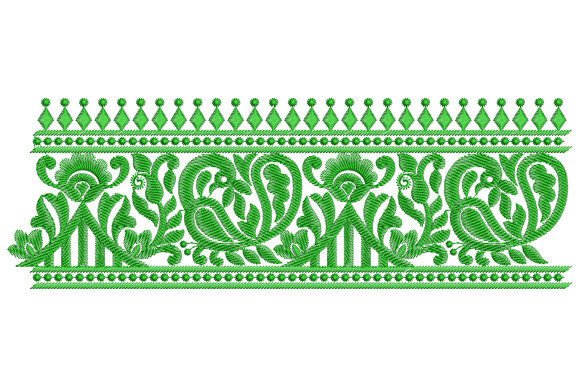
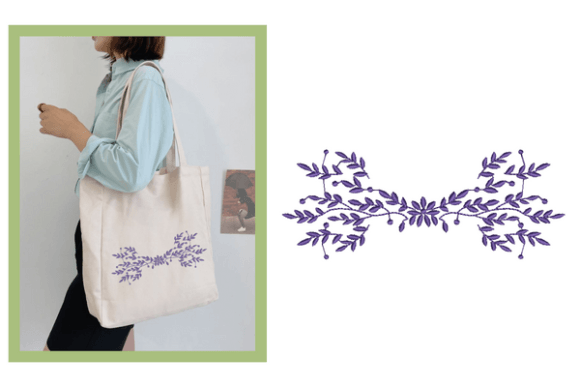
When I first loaded the Flowers Border file onto my screen, the immediate impression was one of approachable elegance. The title suggests a linear or framing element rather than a central medallion, which makes it incredibly versatile for custom apparel and packaging accents. It feels friendly yet professional, striking a balance between rustic charm and modern cleanliness.
For brands aiming for a handmade product aesthetic, this design delivers. It does not feel overly rigid or corporate. Instead, it evokes the warmth of a local florist shop or an artisanal café. However, "colorful" in the description is a double-edged sword. In embroidery, color complexity can drastically affect legibility. If the thread colors are too similar in value, the border may lose definition, especially when scaled down. This design likely relies on strong contrast between the floral elements and the negative space to maintain its visual integrity.
Real-World Business Applications
The true test of any machine embroidery design is its performance in real-world scenarios. Here is how Flowers Border translates across different commercial applications:
- Embroidered Patches: This is perhaps the strongest use case. A border design can be easily converted into a rectangular or arched patch. Imagine a leather patch for a denim jacket or a felt patch for a canvas tote. The linear nature of a border allows it to fit neatly onto existing garments without overwhelming the wearer, making it perfect for brand identity reinforcement.
- Staff Uniforms and Aprons: For cafes, bakeries, or boutiques, consistency is key. Placing Flowers Border along the hemline of an apron or as a chest logo accent on a work shirt adds a touch of premium quality. It signals to customers that attention to detail matters. Unlike a large central graphic, a border is subtle, allowing the brand name to remain the focal point while adding decorative flair.
- Cap Embroidery: Curved surfaces present challenges for detailed designs. If Flowers Border is designed with wide spacing, it may pucker on the front panel of a cap. However, if used as a side stripe or a back-panel accent, it could offer a unique branding opportunity that stands out from standard logo placements.
- Tote Bag Design: Canvas totes are a staple for Etsy branding and craft fairs. A floral border running vertically along the side seams or horizontally across the bottom creates a sophisticated look. It elevates a basic item into a branded experience, increasing the perceived value of the finished product.
- Product Packaging Accents: Beyond apparel, this design shines on textile tags, gift boxes with fabric liners, or branded napkins. It enhances the unboxing experience, contributing to customer trust and recognition through consistent visual language.
Where to Use Caution
Not every application is suitable for every design. As a designer, I must highlight specific areas where Flowers Border might struggle if not handled correctly:
- Small Patch Sizes: If you intend to scale this design down to a size smaller than 2 inches, caution is advised. Fine details in floral borders can merge together, creating a muddy appearance. Always check the stitch density and spacing at the intended final size.
- High Stitch Density: Floral designs often require dense fills to prevent the fabric from showing through. On lightweight fabrics like thin cotton tees or silk, this can cause puckering or distortion. Ensure you have a robust stabilizer strategy in place, such as cut-away stabilizers for stretchy materials.
- Textured Fabric: While the description mentions working with "any fabric," textured materials like bouclé or heavy wool can hide the intricate details of a border. On these surfaces, simpler, bolder designs usually perform better. Test on your actual substrate before bulk production.
- Dark Uniforms: If using light-colored threads on dark uniforms, ensure there is sufficient contrast. Conversely, dark threads on dark fabric will disappear. The "colorful" aspect mentioned in the description implies multiple thread changes, which increases cost and time. Verify that the color palette pops against your base material.
- Frequent Washing: For items like aprons or work shirts that undergo frequent industrial washing, loose edges or delicate outlines may fray over time. Reinforce the design with appropriate underlay stitches and consider a heat-seal edge if converting to a patch.
Impact on Brand Identity and Value
In the world of commercial embroidery, visual consistency is everything. Using a cohesive design like Flowers Border across multiple touchpoints—totes, caps, and uniforms—creates a unified brand image. It tells the customer that your business is established and thoughtful.
Furthermore, embroidered details generally command a higher price point than printed graphics. They convey durability and luxury. By incorporating this design into your design assets, you are not just selling a product; you are selling an experience. Customers are more likely to engage with a brand that presents itself with care, leading to increased loyalty and repeat business.
Practical Designer Notes for Production
Before you send this file to the production floor, follow these essential steps to ensure success:
- Test in Black and White: Convert the design to monochrome to check the balance of positive and negative space. If it looks cluttered in black and white, it will be messy in color.
- Check Hoop Size: Confirm the maximum hoop size required by the design. Ensure your embroidery machines can accommodate the full width and height without needing to re-hoop, which can misalign the pattern.
- Mockup for Approval: Create a printable mockup or a digital render on the actual garment type. Share this with clients or stakeholders to get approval on placement and scale before cutting fabric.
- Compare Side-by-Side: Place Flowers Border next to other design assets in your collection. Does it match the weight and style of your primary logo? Consistency in line weight and detail level is crucial for a professional look.
- Confirm Commercial Licensing: Most importantly, verify the license terms. Ensure you have the right to use this digital embroidery file for commercial merchandise. Unauthorized use can lead to legal issues.
- Stabilizer Selection: Choose the correct stabilizer based on the fabric. Tear-away for stable wovens, cut-away for knits and stretch fabrics, and water-soluble for free-standing lace effects.
In conclusion, Flowers Border offers a charming, versatile option for small businesses looking to elevate their apparel decoration and product offerings. Its strength lies in its adaptability as a border element, suitable for patches, uniforms, and accessories. By paying attention to stitch density, fabric choice, and proper testing, you can transform this simple floral design into a powerful tool for building brand recognition and customer trust.